सनातन धर्म - The Eternal Way
Sanatan Dharma, often called Hinduism, literally means "eternal religion" or "eternal law." It is not merely a religion but a way of life that has guided humanity for thousands of years. The word "Sanatan" means eternal, everlasting, and universal, representing timeless principles that transcend boundaries of time, geography, and culture.
Why is it called Sanatan?
It is called Sanatan because its core principles are eternal and unchanging. Unlike religions with specific founders or fixed doctrines, Sanatan Dharma evolved through divine revelations, ancient wisdom, and spiritual experiences of countless sages and seers across millennia.
Meaning and Significance
Sanatan Dharma encompasses the pursuit of truth, righteousness, and liberation. It teaches that the ultimate goal of human life is to realize the divine within oneself and achieve moksha (liberation) from the cycle of birth and death.
Broader Ways to Eternal Life
The path to eternal life includes four main goals (Purusharthas): Dharma (righteousness), Artha (prosperity), Kama (fulfillment), and Moksha (liberation). These provide a complete framework for human existence.
Core Principles of Sanatan Dharma
Dharma धर्म
Righteousness and moral duty according to one's stage of life and circumstances. The eternal law that governs both individual conduct and cosmic order.
Karma कर्म
The law of cause and effect governing all actions and their consequences. Every action creates an equal and opposite reaction in the moral universe.
Moksha मोक्ष
Liberation from the cycle of birth and death, ultimate spiritual goal. The state of eternal bliss and union with the divine consciousness.
Ahimsa अहिंसा
Non-violence and compassion toward all living beings. Extending kindness and avoiding harm in thought, word, and deed.
Satya सत्य
Truthfulness in thought, word, and deed. Living in alignment with ultimate reality and cosmic truth.
Tapasya तपस्या
Self-discipline and spiritual practice for inner purification. Voluntary austerities that burn away impurities and reveal our true nature.
How to Practice Sanatan Dharma
Daily Prayer and Meditation
Regular spiritual practice to connect with the divine
Following Dharma
Living according to righteous principles
Seva (Service)
Selfless service to humanity and all living beings
Study of Scriptures
Learning from Vedas, Upanishads, and other sacred texts
Respect for Nature
Understanding the divinity in all creation
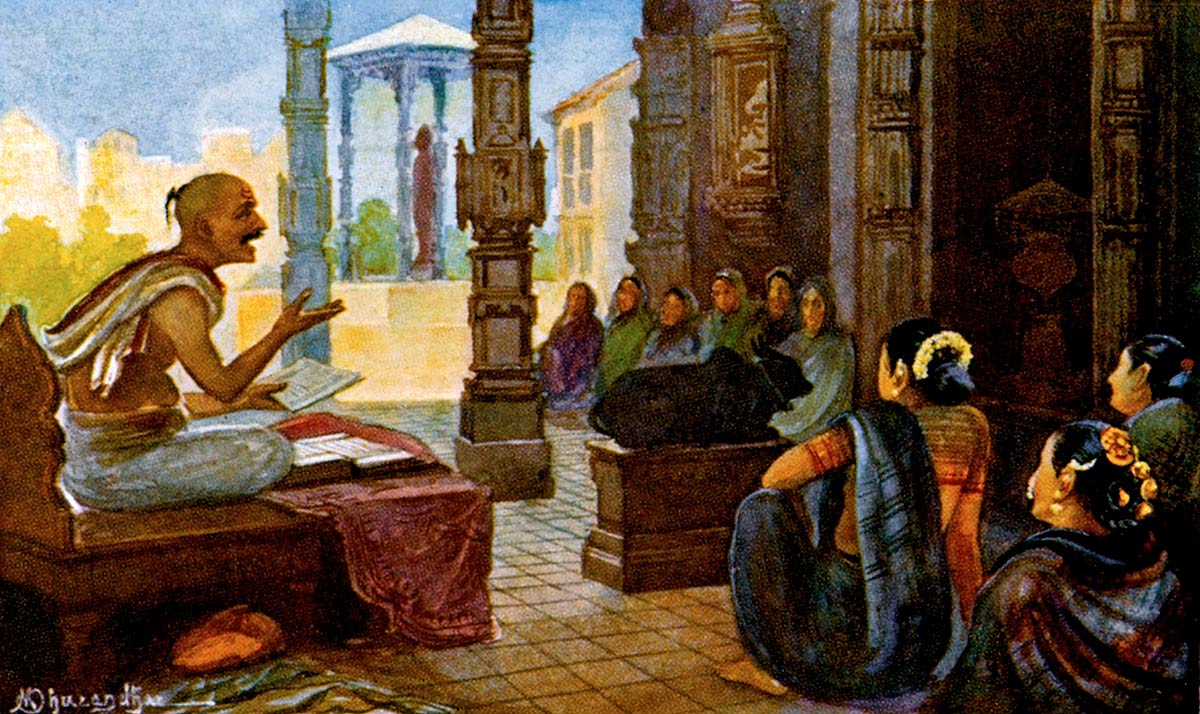
Guru-Shishya Tradition
Learning from enlightened teachers
Sacred Texts and Philosophy
Vedas
The foundational scriptures containing divine revelations and cosmic knowledge
Upanishads
Philosophical texts exploring the nature of reality and the self
Bhagavad Gita
The eternal dialogue on duty, devotion, and spiritual wisdom
Ramayana & Mahabharata
Epic narratives teaching moral and spiritual lessons